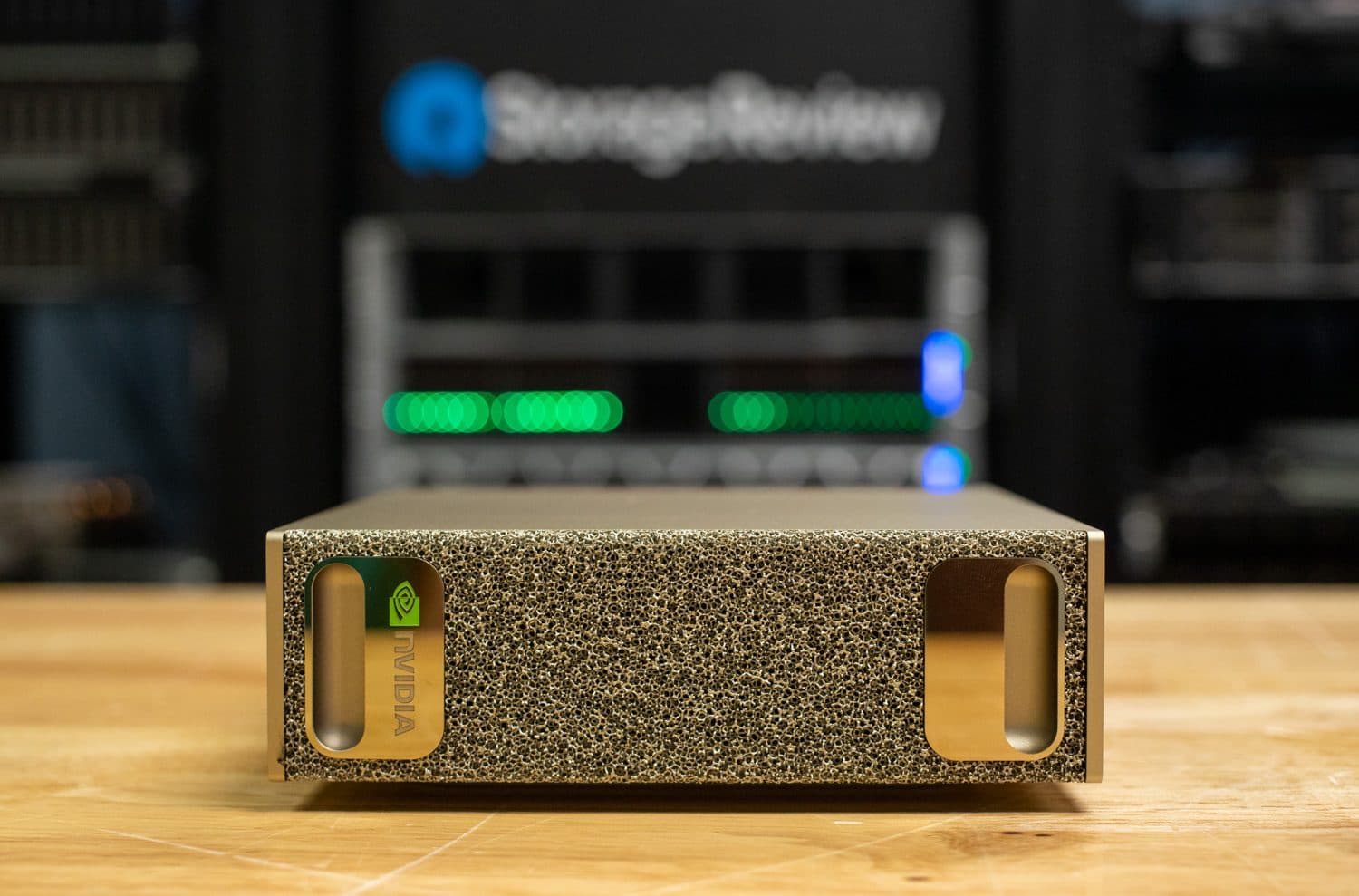
The DGX Spark is the most exciting dev box of the year. It's also where SmartTec starts. Same GB10 architecture. Production scale.

Best-in-class for prototyping. 200B params at your desk, 405B with two linked over ConnectX-7. But it's one developer, one model, one power outlet.

Same NVIDIA silicon, deployed behind megawatt-scale batteries we built. Hundreds of concurrent users. Sub-10ms failover. SLA-backed. Token-billed or reserved.
Both run NVIDIA. Both run Grace Blackwell. Only one is an AI factory.
At GTC 2026, NVIDIA said “tokens per watt” is the new efficiency benchmark. We agree. SmartTec scores higher because our power comes from a battery that arbitrage-charges off-peak — we don't run on the gas peakers your cluster hits during a hot summer afternoon.
Typical hyperscaler running on retail grid. Hits dirty peakers during peak. Average emissions intensity ~0.4 kg CO₂/kWh.
Behind-the-meter BESS charges off-peak (cheapest, cleanest hours), discharges during compute bursts. Same silicon, 30% more tokens per joule.
At 1 GW of sustained AI load, the difference between 0.62 and 0.81 tokens/watt is roughly $140M/year in power cost and ~600,000 tons of CO₂— for the same inference output. We're not chasing the metric; we're already winning it.
This is how the next generation of AI teams ship. Prototype locally. Production at scale. Same models, same toolchain, zero rewrite.
Run a 70B or 200B model at your desk. Fine-tune. Eval. Iterate in seconds. vLLM and the NVIDIA stack work identically to SmartTec — same commands, same containers.
Plug in your model + target throughput. We show VRAM fit, max concurrent sequences, tokens/sec, and a copy-pasteable vLLM deploy command. 30 seconds.
Same model, same command. Now running on a GB200 NVL72 rack behind 25 kW of LFP batteries per CS-3. SLA-backed. Sub-10ms failover. Priced per token.
Run the fit-check on your model. We'll show you the exact vLLM command, the rack you'd land on, and the per-token cost. Q4 2026 power-on for design partners.